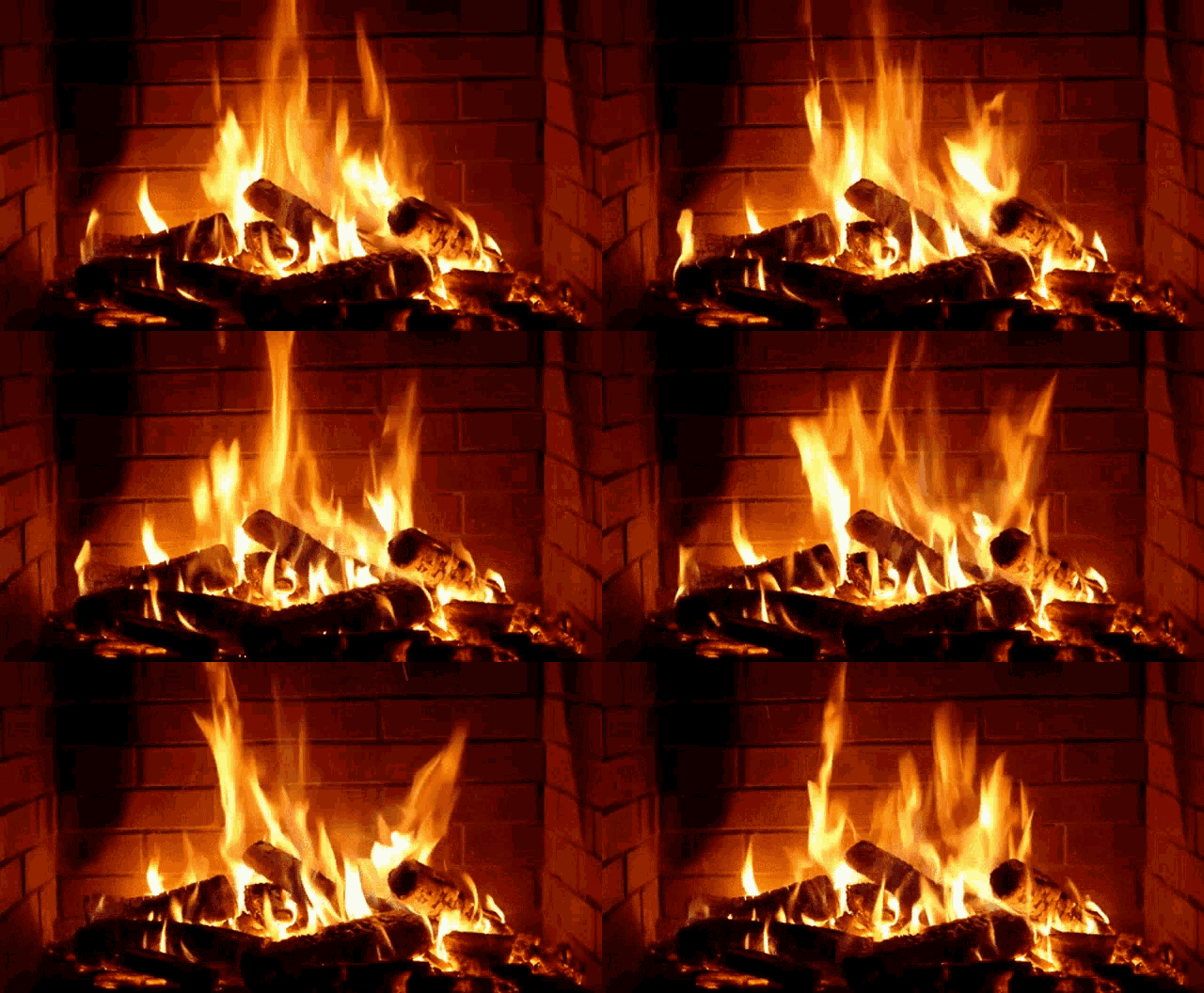
A warm fire burning in an inglenook

Ingle

/ˈɪŋɡ(ə)l/ • noun

1. A fire burning on a hearth.
2. The fireplace or hearth itself.

Discover the warmth

The Atmosphere

While "ingle" is a relatively rare word in modern conversation, it evokes a very specific and warm atmosphere. It is almost exclusively used to describe a domestic, cozy fire, rather than a large bonfire or an industrial blaze.

"It represents a specific type of warmth that 'fireplace' doesn't quite capture."

Origin & Etymology

Roots

The word comes from the Scottish Gaelic word aingeal, which means "fire" or "light."

Connection

Interestingly, aingeal is also the Gaelic word for "angel". Some suggest a poetic connection between the glowing light of a fire and a celestial being.

Entered the English language via Scots around the early 16th century.

The Inglenook

You are most likely to encounter the word today as part of the compound inglenook (literally "ingle" + "nook").

Historically, large open fireplaces were drafty. Builders created small corners with bench seats built directly into the chimney breast. These "nooks" were the warmest places in the house, reserved for the elderly or children.

The concept was revived during the Arts and Crafts movement by architects like Frank Lloyd Wright, who used inglenooks to create intimacy in large open floor plans.

Literary Significance

Because of its Scottish roots, "ingle" appears frequently in the poetry of Robert Burns. It appears in several of his most famous works, serving as a symbol of safety, community, and the "peasant's refuge" from the harsh outside world.

The Cotter's Saturday Night

Perhaps his most famous use, painting the ultimate picture of a happy Scottish home.

"His wee bit ingle, blinkin bonnilie,
His clean hearth-stane, his thrifty wifie's smile..."

Tam o' Shanter

Here, the "ingle" represents the safety regarding the storm (and witches) outside.

"Fast by an ingle, bleezing finely,
Wi' reaming swats [frothing ale], that drank divinely..."

Epistle to Davie

Describing huddling together against the winter winds.

"While winds frae off Ben-Lomond blaw...
And hing us owre the ingle..."

The Vision

Highlighting the compound "ingle-cheek" (the side of the fireplace).

"There, lanely, by the ingle-cheek,
I sat and ey'd the spewing reek [smoke]..."

Important Distinction: The Farmer's Ingle

If you research this topic, you will frequent see the title The Farmer's Ingle. Warning: This poem is not by Robert Burns.

It was written by Robert Fergusson, a major inspiration to Burns. In fact, Burns' The Cotter's Saturday Night was essentially a tribute to Fergusson's work.